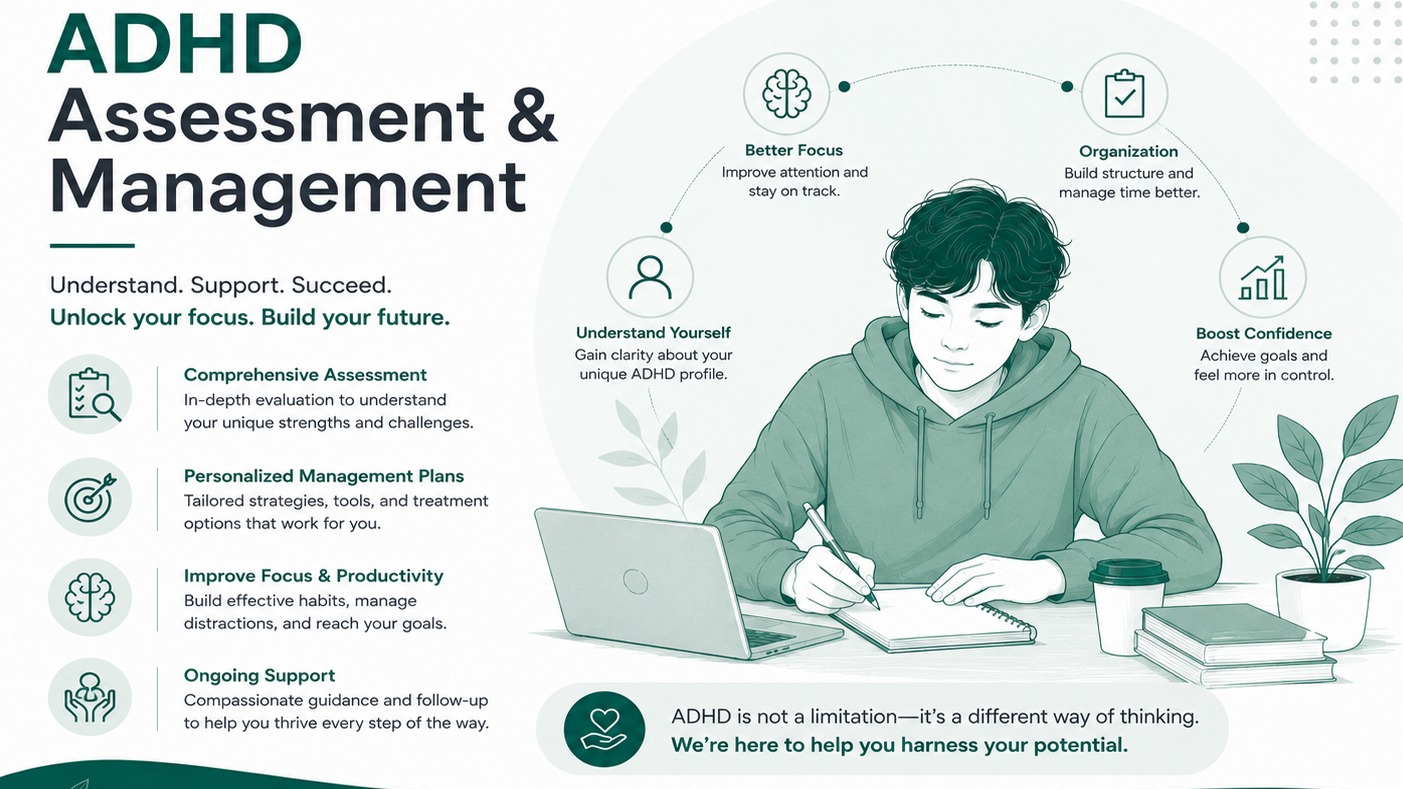
Attention-Deficit/Hyperactivity Disorder (ADHD) is a neurodevelopmental condition that affects attention, focus, impulse control, behavior, and daily functioning. ADHD can impact academic performance, workplace productivity, relationships, and emotional well-being. Early diagnosis and professional ADHD assessment and management can help individuals improve concentration, behavior, organization, and overall quality of life.
Our experienced mental health specialists provide personalized, evidence-based ADHD assessment and management services for children, adolescents, and adults.
What is ADHD?
ADHD is a condition that affects the brain’s ability to regulate attention, activity levels, and self-control. Individuals with ADHD may experience difficulties staying focused, managing tasks, controlling impulses, or sitting still for extended periods.
ADHD symptoms can vary in severity and may continue into adulthood if left untreated.
Predominantly Inattentive Type
Individuals mainly experience problems with focus, concentration, organization, and completing tasks.
Predominantly Hyperactive-Impulsive Type
This type is characterized by excessive activity, restlessness, impulsive behavior, and difficulty staying calm.
Combined Type
A combination of inattentive and hyperactive-impulsive symptoms.
Common Symptoms of ADHD
Inattention Symptoms
Difficulty concentrating, easily distracted, forgetfulness, poor organizational skills, trouble completing tasks, frequently losing items, and difficulty following instructions.
Hyperactivity Symptoms
Excessive talking, restlessness or constant movement, difficulty sitting still, and fidgeting or impatience.
Impulsivity Symptoms
Interrupting conversations, acting without thinking, difficulty waiting for turns, and emotional outbursts.
Symptoms may vary depending on age, lifestyle, and individual personality.
Causes of ADHD
The exact cause of ADHD is not fully understood, but contributing factors may include:
- Genetic predisposition
- Brain structure and function differences
- Family history of ADHD
- Premature birth or low birth weight
- Exposure to environmental toxins
- Neurological factors
Understanding contributing factors helps develop a personalized management plan.
ADHD Assessment
A comprehensive ADHD assessment may include:
- Behavioral and psychological evaluation
- Attention and concentration assessment
- Medical and developmental history review
- Academic or workplace performance evaluation
- Parent, teacher, or family feedback
- ADHD screening questionnaires
Accurate diagnosis is important for effective long-term symptom management.
ADHD Management and Treatment Options
Behavioral Therapy
Behavioral therapy helps individuals develop positive habits, improve self-control, and manage impulsive behavior.
Cognitive Behavioral Therapy (CBT)
CBT helps improve emotional regulation, focus, and coping strategies for managing daily challenges.
Medication Management
Certain medications may help improve attention, reduce impulsivity, and enhance concentration under psychiatric supervision.
Academic and Workplace Support
Strategies may include time management techniques, organizational skills training, study and productivity support, and structured routines and planning.
Parent and Family Counseling
Family education and counseling can help create supportive environments for children and adults with ADHD.
Lifestyle and Wellness Support
Healthy lifestyle habits can improve ADHD management, including regular exercise, balanced nutrition, proper sleep routines, reduced screen distractions, and stress management techniques.
Benefits of Professional ADHD Management
- Improved focus and concentration
- Better academic and work performance
- Enhanced organizational skills
- Improved emotional regulation
- Reduced impulsive behavior
- Better self-confidence and motivation
- Improved relationships and communication
- Better overall quality of life
Why Choose Our ADHD Assessment & Management Services?
We are committed to helping individuals with ADHD achieve their full potential and lead healthier, more productive lives.
When to Seek Professional Help
Professional assessment is recommended if attention or behavioral difficulties:
- Affect academic or work performance
- Interfere with daily functioning
- Cause emotional or social difficulties
- Lead to impulsive or disruptive behavior
- Affect confidence and relationships
Early diagnosis and treatment can significantly improve long-term outcomes and emotional well-being.

Dr. Amisha Vashisht
MBBS, DNB Psychiatry
Ex. VIMHANS Hospital, Delhi
-
+91 08287783415 Call for appointments
-
+91 08287783415 WhatsApp us anytime
-
mindcareclinic2026@gmail.com Email us your query
-
B1/10A, Main Service Ln, Near Bank of Baroda, Block B, Yamuna Vihar, Delhi 110053 Get directions →
-
Mon–Fri | 10:00 AM – 1:00 PM DMC Reg: 101274