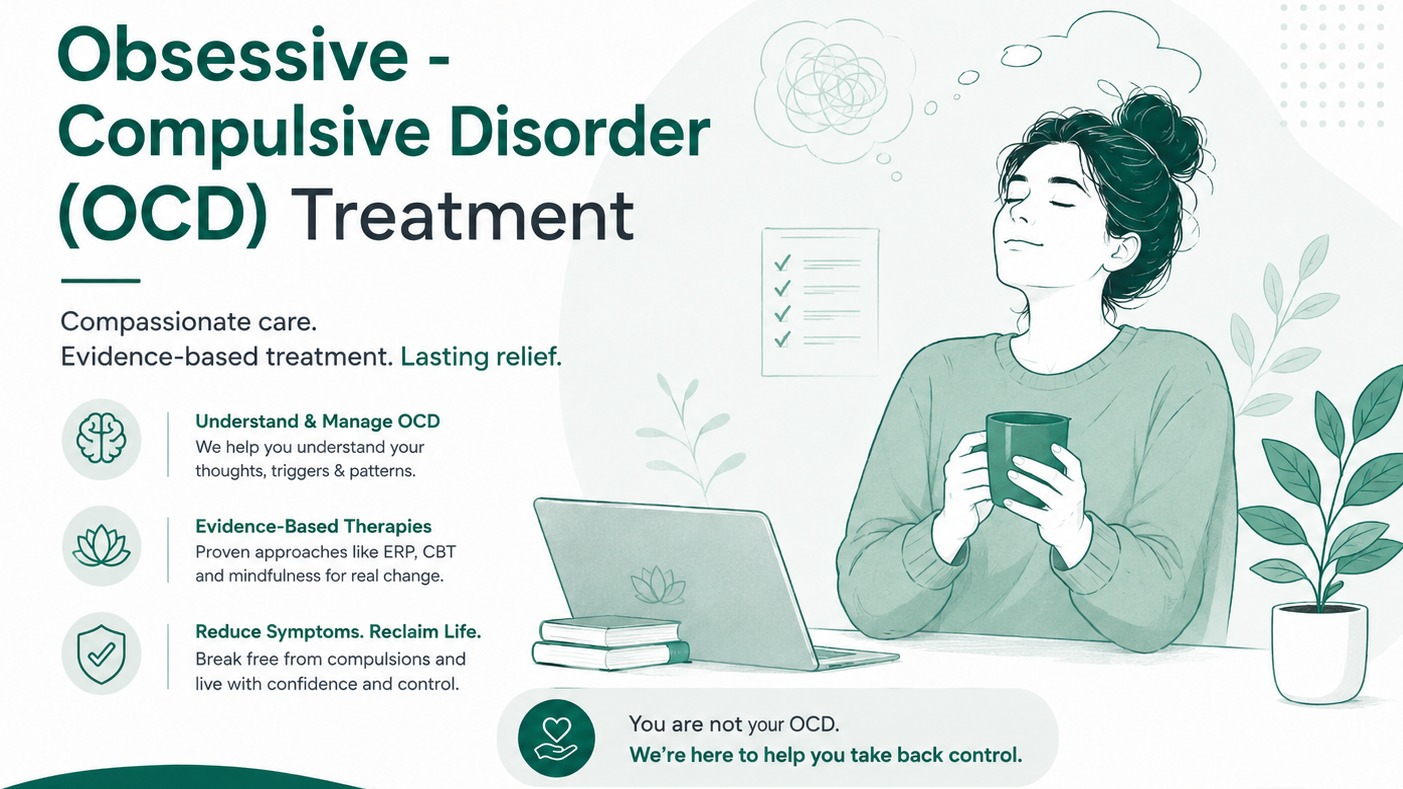
Obsessive-Compulsive Disorder (OCD) is a mental health condition that causes recurring unwanted thoughts and repetitive behaviors that can interfere with daily life, relationships, work, and emotional well-being. Professional OCD treatment helps individuals manage symptoms, reduce anxiety, and regain control over their thoughts and actions.
Our experienced mental health specialists provide compassionate, personalized, and evidence-based OCD treatment focused on long-term emotional wellness and recovery.
What is OCD?
Obsessive-Compulsive Disorder (OCD) is characterized by:
Obsessions
Persistent and unwanted thoughts, fears, or urges that create anxiety or emotional distress.
Compulsions
Repetitive behaviors or mental rituals performed to reduce anxiety caused by obsessive thoughts.
Individuals with OCD often recognize that these thoughts and behaviors are excessive, but may struggle to control them without professional help.
Common Symptoms of OCD
OCD symptoms can vary from person to person but commonly include:
Obsessive Symptoms
- Fear of contamination or germs
- Repeated doubts or fear of mistakes
- Unwanted aggressive or disturbing thoughts
- Need for symmetry or perfection
- Excessive concern about safety or order
Compulsive Symptoms
- Excessive hand washing or cleaning
- Repeated checking behaviors
- Counting or repeating words silently
- Arranging items in a specific order
- Seeking constant reassurance
These symptoms may consume significant time and interfere with daily functioning.
Causes of OCD
The exact cause of OCD is not fully understood, but several factors may contribute, including:
- Genetic predisposition
- Brain chemistry imbalance
- Family history of mental health disorders
- Stressful life events
- Trauma or emotional distress
- Personality traits and anxiety disorders
Understanding the underlying causes helps create an effective and personalized treatment plan.
OCD Diagnosis
A mental health professional performs a detailed psychological assessment, which may include:
- Symptom evaluation
- Behavioral assessment
- Emotional and psychological analysis
- Medical and psychiatric history review
- OCD screening questionnaires
Early diagnosis can improve treatment outcomes and quality of life.
OCD Treatment Options
Cognitive Behavioral Therapy (CBT)
CBT is one of the most effective therapies for OCD. It helps patients identify unhealthy thought patterns and develop healthier coping mechanisms.
Exposure and Response Prevention (ERP)
ERP therapy gradually exposes individuals to anxiety triggers while helping them resist compulsive behaviors in a safe and controlled environment.
Medication Management
Certain medications may help reduce obsessive thoughts and compulsive behaviors when prescribed by a qualified psychiatrist.
Counseling and Psychotherapy
Supportive counseling helps individuals manage emotional distress, stress, and anxiety related to OCD.
Stress Management and Relaxation Techniques
Techniques that may support OCD recovery include mindfulness therapy, meditation, deep breathing exercises, yoga and relaxation therapy.
Family Support and Education
Family counseling can help loved ones better understand OCD and provide supportive care during recovery.
Benefits of Professional OCD Treatment
- Reduced obsessive thoughts and compulsive behaviors
- Improved emotional well-being
- Better stress and anxiety management
- Improved concentration and productivity
- Enhanced confidence and self-control
- Better relationships and social functioning
- Improved overall quality of life
Why Choose Our OCD Treatment Services?
We are committed to helping individuals manage OCD symptoms and achieve healthier emotional balance.
When to Seek Professional Help
Professional mental health support is recommended if OCD symptoms:
- Interfere with daily activities
- Cause severe anxiety or distress
- Affect relationships or work performance
- Consume excessive time each day
- Lead to social withdrawal or emotional exhaustion
Early treatment can significantly improve long-term mental wellness and recovery outcomes.

Dr. Amisha Vashisht
MBBS, DNB Psychiatry
Ex. VIMHANS Hospital, Delhi
-
+91 08287783415 Call for appointments
-
+91 08287783415 WhatsApp us anytime
-
mindcareclinic2026@gmail.com Email us your query
-
B1/10A, Main Service Ln, Near Bank of Baroda, Block B, Yamuna Vihar, Delhi 110053 Get directions →
-
Mon–Fri | 10:00 AM – 1:00 PM DMC Reg: 101274