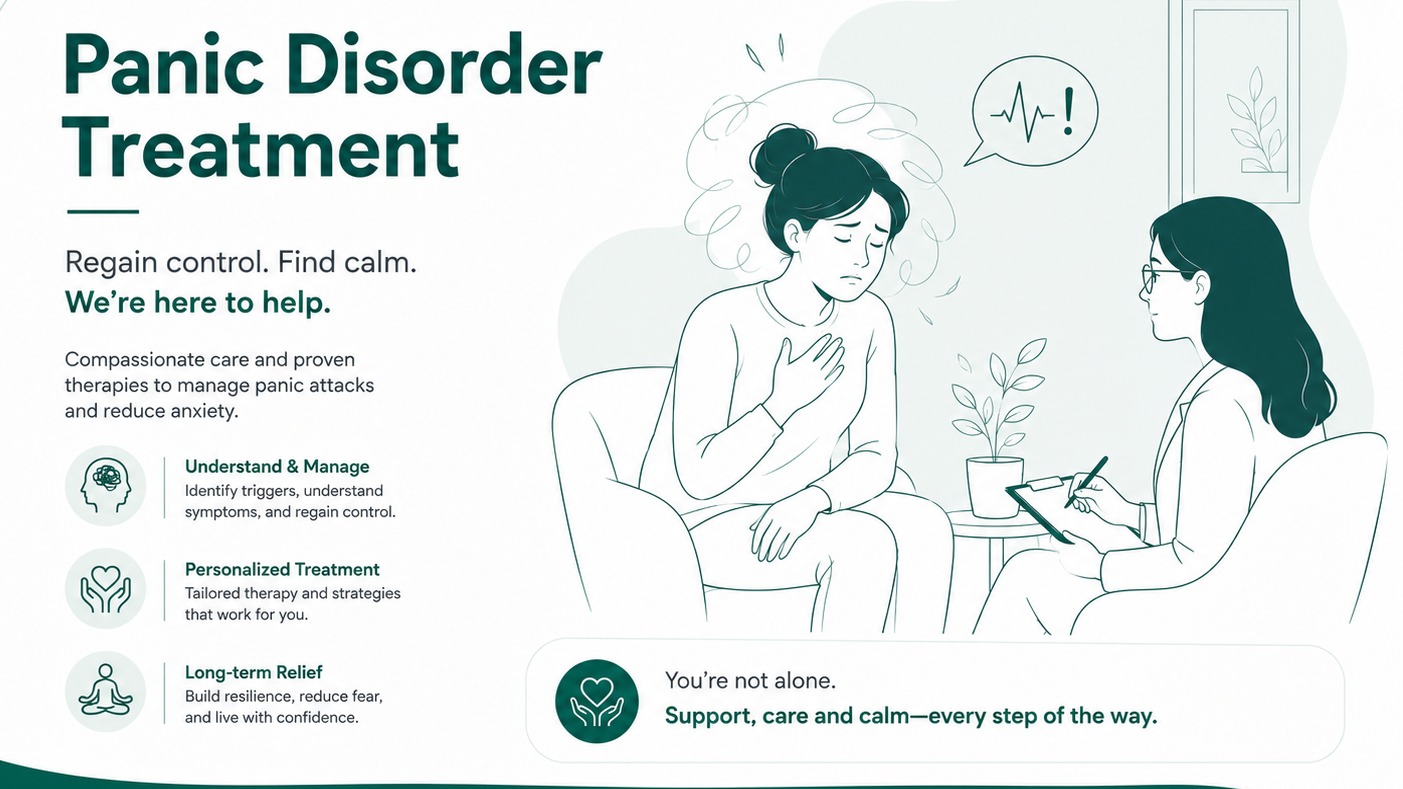
Panic disorder is a serious anxiety condition characterized by sudden and repeated panic attacks that can cause intense fear, emotional distress, and physical symptoms. These attacks may occur unexpectedly and can interfere with work, relationships, social activities, and overall quality of life. Professional panic disorder treatment helps individuals manage panic attacks, reduce anxiety, and regain emotional confidence and stability.
Our experienced mental health specialists provide compassionate, evidence-based panic disorder treatment tailored to each patient's emotional and psychological needs.
What is Panic Disorder?
Panic disorder is a type of anxiety disorder that causes recurring panic attacks — sudden episodes of intense fear or discomfort that peak within minutes. Panic attacks may happen without warning and often create fear of future attacks.
Many individuals with panic disorder begin avoiding places or situations where they previously experienced panic attacks, which can significantly affect daily life.
Symptoms of Panic Disorder
Emotional Symptoms
Sudden intense fear or terror, feeling out of control, fear of losing control or dying, persistent worry about future panic attacks, and anxiety in crowded or public places.
Physical Symptoms
Rapid heartbeat or palpitations, chest pain or discomfort, shortness of breath, sweating or chills, dizziness or lightheadedness, trembling or shaking, nausea or stomach discomfort, and tingling sensations or numbness.
Panic Attack Symptoms
Panic attacks can feel overwhelming and may sometimes be mistaken for a heart attack.
- Sudden intense fear or terror
- Feeling out of control
- Fear of losing control or dying
- Rapid heartbeat or palpitations
- Chest pain or discomfort
- Shortness of breath
- Sweating or chills
- Dizziness or lightheadedness
- Trembling or shaking
- Nausea or stomach discomfort
Causes of Panic Disorder
Several factors may contribute to panic disorder, including:
- Chronic stress and anxiety
- Family history of anxiety disorders
- Brain chemistry imbalance
- Traumatic or stressful life events
- Personality traits
- Substance abuse or excessive caffeine use
- Other mental health conditions
Understanding the underlying causes helps create an effective personalized treatment plan.
Panic Disorder Diagnosis
A mental health specialist performs a detailed evaluation that may include:
- Psychological assessment
- Symptom and panic attack history
- Emotional and behavioral evaluation
- Medical history review
- Anxiety disorder screening
Proper diagnosis is important to rule out other medical conditions and ensure appropriate treatment.
Panic Disorder Treatment Options
Cognitive Behavioral Therapy (CBT)
CBT is one of the most effective treatments for panic disorder. It helps individuals identify negative thought patterns and develop healthier responses to anxiety triggers.
Exposure Therapy
Exposure therapy gradually helps individuals face feared situations or sensations in a safe and controlled environment, reducing panic-related fear over time.
Counseling and Psychotherapy
Professional counseling provides emotional support and practical coping strategies for managing panic attacks and anxiety.
Medication Management
Certain medications may help reduce panic attacks and anxiety symptoms when prescribed by a qualified psychiatrist.
Stress Management Techniques
Relaxation methods can help control anxiety and panic symptoms, including deep breathing exercises, meditation and mindfulness, yoga and relaxation therapy, and progressive muscle relaxation.
Lifestyle and Wellness Support
Healthy lifestyle habits can improve emotional well-being and reduce panic symptoms, including regular exercise, adequate sleep, balanced nutrition, and limiting caffeine and alcohol intake.
Benefits of Professional Panic Disorder Treatment
- Reduced frequency and intensity of panic attacks
- Better anxiety management
- Improved emotional confidence
- Enhanced daily functioning
- Better sleep and concentration
- Improved social and professional life
- Increased emotional stability
Why Choose Our Panic Disorder Treatment Services?
When to Seek Professional Help
Professional support is recommended if panic attacks:
- Occur repeatedly
- Cause severe fear or emotional distress
- Interfere with daily activities
- Lead to avoidance behaviors
- Affect work, studies, or relationships
- Cause ongoing anxiety about future attacks
Early treatment can help prevent worsening symptoms and improve long-term recovery outcomes.

Dr. Amisha Vashisht
MBBS, DNB Psychiatry
Ex. VIMHANS Hospital, Delhi
-
+91 08287783415 Call for appointments
-
+91 08287783415 WhatsApp us anytime
-
mindcareclinic2026@gmail.com Email us your query
-
B1/10A, Main Service Ln, Near Bank of Baroda, Block B, Yamuna Vihar, Delhi 110053 Get directions →
-
Mon–Fri | 10:00 AM – 1:00 PM DMC Reg: 101274