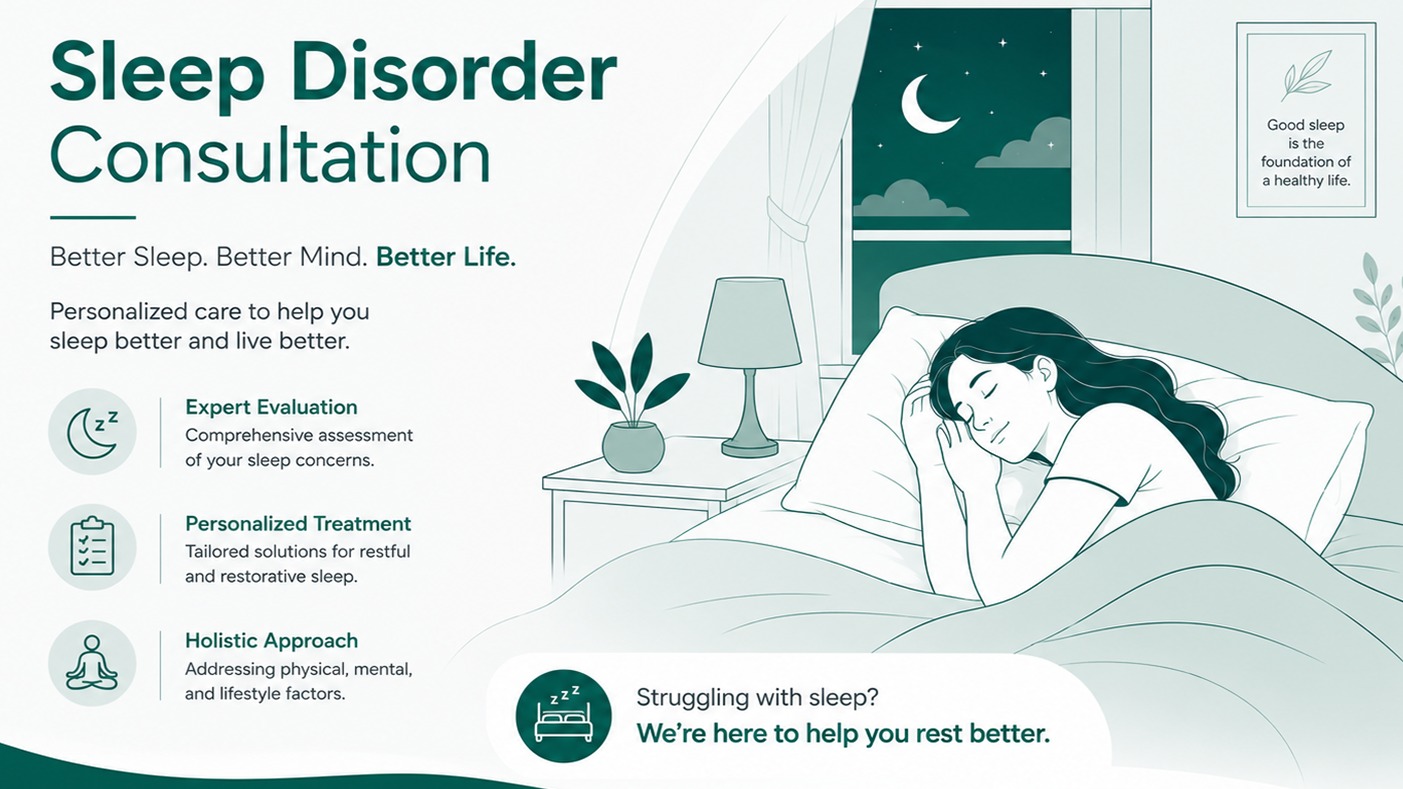
Sleep plays a vital role in maintaining physical health, emotional balance, mental clarity, and daily productivity. Sleep disorders can affect the quality, duration, and pattern of sleep, leading to fatigue, stress, poor concentration, and various health complications. Professional sleep disorder consultation helps identify the underlying causes of sleep problems and provides personalized treatment solutions for healthier and more restful sleep.
Our experienced mental health and sleep specialists provide comprehensive sleep disorder consultations focused on improving sleep quality and overall well-being.
What are Sleep Disorders?
Sleep disorders are medical or psychological conditions that interfere with normal sleep patterns. These disorders can affect the ability to fall asleep, stay asleep, or achieve restful sleep.
Sleep problems may be temporary or chronic and can significantly impact daily functioning and quality of life.
Common Types of Sleep Disorders
Insomnia
Difficulty falling asleep, staying asleep, or waking up too early.
Sleep Apnea
Interrupted breathing during sleep, often associated with loud snoring and daytime fatigue.
Restless Legs Syndrome (RLS)
An uncomfortable sensation in the legs causing an urge to move them, especially at night.
Narcolepsy
A neurological condition causing excessive daytime sleepiness and sudden sleep episodes.
Circadian Rhythm Sleep Disorders
Disruptions in the body's natural sleep-wake cycle, often caused by shift work or irregular schedules.
Parasomnias
Abnormal sleep behaviors such as sleepwalking, nightmares, or night terrors.
Common Symptoms of Sleep Disorders
Symptoms may vary depending on the condition but commonly include:
- Difficulty falling asleep
- Frequent nighttime awakenings
- Excessive daytime sleepiness
- Loud snoring
- Morning headaches
- Fatigue or low energy
- Poor concentration and memory
- Irritability or mood changes
- Anxiety or stress related to sleep
- Restless sleep
Persistent sleep issues should be evaluated by a healthcare professional.
Causes of Sleep Disorders
Sleep disorders may occur due to various physical, emotional, or lifestyle factors, including:
- Stress and anxiety
- Depression or emotional distress
- Poor sleep habits
- Medical conditions
- Obesity
- Neurological disorders
- Substance or alcohol use
- Hormonal imbalances
- Shift work and irregular schedules
Identifying the root cause is essential for effective treatment and long-term sleep improvement.
Sleep Disorder Diagnosis
Our sleep specialists conduct a detailed evaluation that may include:
- Sleep history assessment
- Lifestyle and behavioral evaluation
- Medical and psychological assessment
- Sleep pattern analysis
- Screening questionnaires
A proper diagnosis helps create a personalized sleep management plan.
Sleep Disorder Treatment Options
Behavioral Therapy for Sleep
Therapies such as Cognitive Behavioral Therapy for Insomnia (CBT-I) help improve sleep habits and address negative sleep patterns.
Stress and Anxiety Management
Managing stress and emotional health can significantly improve sleep quality.
Lifestyle and Sleep Hygiene Guidance
Patients receive guidance on healthy sleep habits, including maintaining consistent sleep schedules and creating comfortable sleep environments.
Medication Management
In some cases, medications may be recommended to manage sleep disorders under professional supervision.
Relaxation Techniques
Sleep-focused relaxation therapies including meditation, deep breathing exercises, yoga, and progressive muscle relaxation.
Treatment for Underlying Conditions
Managing medical or psychological conditions contributing to sleep disturbances is essential for long-term recovery.
Benefits of Professional Sleep Disorder Consultation
- Improved sleep quality and duration
- Increased daytime energy and alertness
- Better concentration and productivity
- Reduced stress and anxiety
- Improved emotional well-being
- Better physical health and immunity
- Enhanced overall quality of life
Why Choose Our Sleep Disorder Consultation Services?
When to Seek Professional Help
You should seek professional consultation if you experience:
- Persistent insomnia or sleep difficulties
- Loud snoring or breathing interruptions
- Daytime fatigue despite adequate sleep
- Frequent nightmares or sleepwalking
- Difficulty functioning during the day
- Sleep problems affecting mental or physical health
Early treatment can help prevent long-term health complications related to poor sleep.

Dr. Amisha Vashisht
MBBS, DNB Psychiatry
Ex. VIMHANS Hospital, Delhi
-
+91 08287783415 Call for appointments
-
+91 08287783415 WhatsApp us anytime
-
mindcareclinic2026@gmail.com Email us your query
-
B1/10A, Main Service Ln, Near Bank of Baroda, Block B, Yamuna Vihar, Delhi 110053 Get directions →
-
Mon–Fri | 10:00 AM – 1:00 PM DMC Reg: 101274