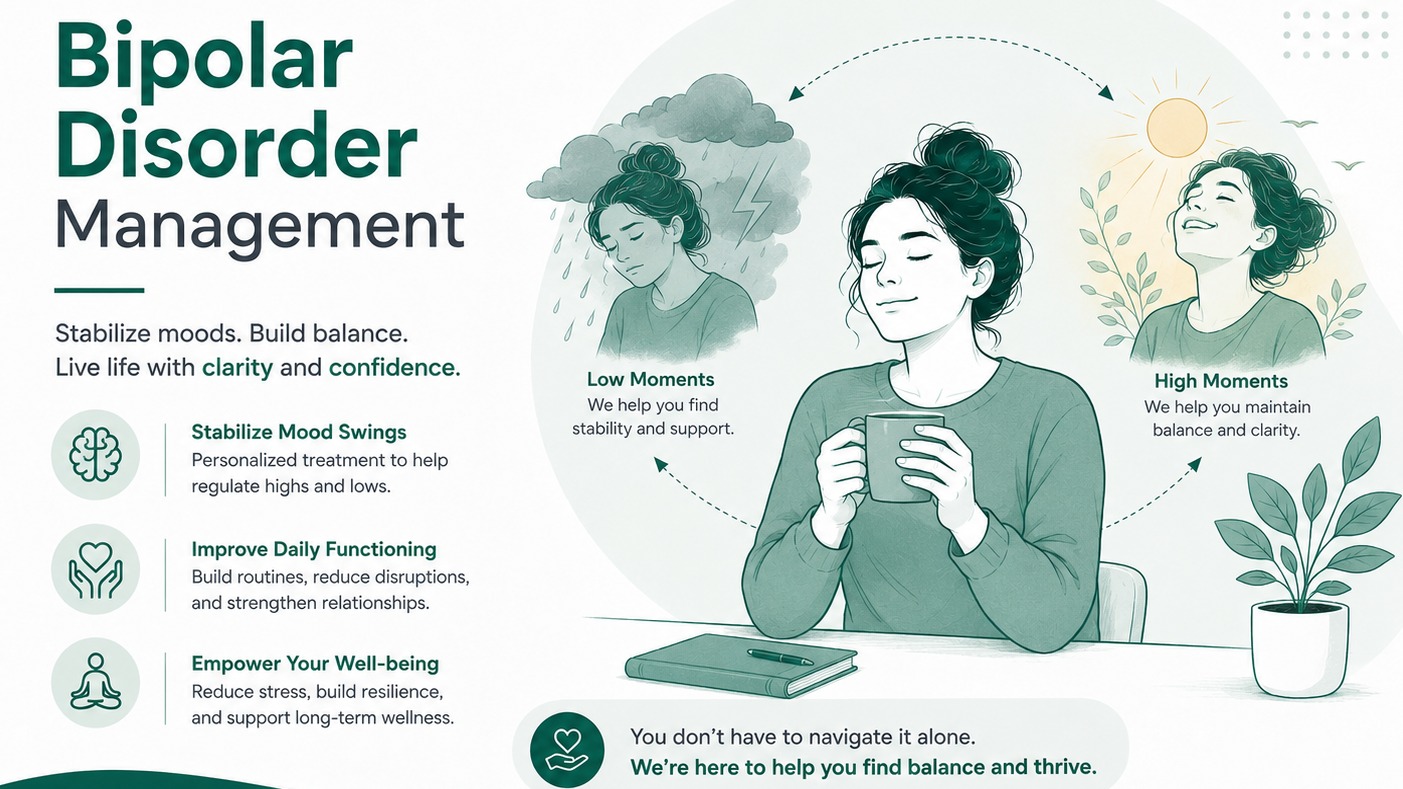
Bipolar disorder is a complex mental health condition that causes significant changes in mood, energy levels, activity, and behavior. Individuals with bipolar disorder may experience periods of extreme emotional highs (mania or hypomania) and depressive lows that can affect relationships, work, studies, and daily life. Professional bipolar disorder management helps individuals stabilize mood, improve emotional well-being, and maintain a healthier and more balanced lifestyle.
Our experienced mental health specialists provide personalized, compassionate, and evidence-based bipolar disorder management focused on long-term emotional wellness and recovery.
What is Bipolar Disorder?
Bipolar disorder is a mental health condition characterized by unusual shifts in mood, energy, concentration, and activity levels.
The condition typically involves episodes of:
Mania or Hypomania
Periods of unusually elevated mood, excessive energy, impulsive behavior, or increased activity.
Depression
Periods of persistent sadness, hopelessness, low energy, and loss of interest in daily activities.
These mood changes can vary in intensity and duration depending on the type of bipolar disorder.
Types of Bipolar Disorder
Bipolar I Disorder
Characterized by severe manic episodes that may require medical attention, often accompanied by depressive episodes.
Bipolar II Disorder
Involves depressive episodes along with hypomania, which is a less severe form of mania.
Cyclothymic Disorder
A milder but chronic form of bipolar disorder involving ongoing mood fluctuations.
Symptoms of Bipolar Disorder
Symptoms of Mania or Hypomania
Increased energy and activity, excessive talking, reduced need for sleep, racing thoughts, impulsive decision-making, increased confidence or irritability, and risk-taking behavior.
Symptoms of Depression
Persistent sadness or hopelessness, fatigue or low energy, loss of interest in activities, difficulty concentrating, changes in sleep and appetite, feelings of guilt or worthlessness, and social withdrawal.
Symptoms may vary from person to person and can impact emotional, social, and professional functioning.
Causes of Bipolar Disorder
The exact cause of bipolar disorder is not fully understood, but contributing factors may include:
- Genetic predisposition
- Brain chemistry imbalance
- Family history of mental illness
- Chronic stress
- Trauma or emotional distress
- Substance abuse
- Major life changes
Identifying triggers and underlying factors is important for effective long-term management.
Bipolar Disorder Diagnosis
A mental health professional conducts a detailed evaluation that may include:
- Psychological assessment
- Mood and behavior analysis
- Medical and family history review
- Symptom tracking
- Mental health screening questionnaires
Accurate diagnosis is essential for developing an effective personalized treatment plan.
Bipolar Disorder Management Options
Medication Management
Mood stabilizers and other psychiatric medications may help regulate mood swings and improve emotional balance when prescribed by a qualified psychiatrist.
Cognitive Behavioral Therapy (CBT)
CBT helps individuals recognize unhealthy thought patterns, manage emotional triggers, and develop healthier coping skills.
IPSRT (Interpersonal & Social Rhythm Therapy)in psychotherapy
Interpersonal and Social Rhythm Therapy (IPSRT) is an evidence-based psychotherapy primarily for bipolar disorder, designed to stabilize mood by regulating daily routines and improving interpersonal relationships.
Lifestyle and Routine Management
Maintaining a stable daily routine can help reduce mood fluctuations, including consistent sleep schedules, regular physical activity, healthy nutrition, stress reduction practices, and avoiding alcohol and substance use.
Family and Supportive Therapy
Family involvement and support groups can improve communication, emotional support, and long-term recovery.
Stress and Emotional Wellness Programs
Mindfulness, meditation, yoga, and relaxation techniques may help improve emotional regulation and mental wellness.
Benefits of Professional Bipolar Disorder Management
- Improved emotional stability
- Better control of mood swings
- Reduced depressive and manic episodes
- Improved relationships and communication
- Better work and social functioning
- Enhanced stress management
- Improved sleep and daily routine
- Better overall quality of life
Why Choose Our Bipolar Disorder Management Services?
We are committed to helping individuals achieve emotional balance, stability, and improved mental wellness.
When to Seek Professional Help
Professional mental health support is recommended if mood changes:
- Interfere with daily life
- Affect work, studies, or relationships
- Cause impulsive or risky behavior
- Lead to prolonged depression or emotional distress
- Affect sleep, concentration, or energy levels
Early diagnosis and treatment can improve long-term recovery outcomes and quality of life.

Dr. Amisha Vashisht
MBBS, DNB Psychiatry
Ex. VIMHANS Hospital, Delhi
-
+91 08287783415 Call for appointments
-
+91 08287783415 WhatsApp us anytime
-
mindcareclinic2026@gmail.com Email us your query
-
B1/10A, Main Service Ln, Near Bank of Baroda, Block B, Yamuna Vihar, Delhi 110053 Get directions →
-
Mon–Fri | 10:00 AM – 1:00 PM DMC Reg: 101274