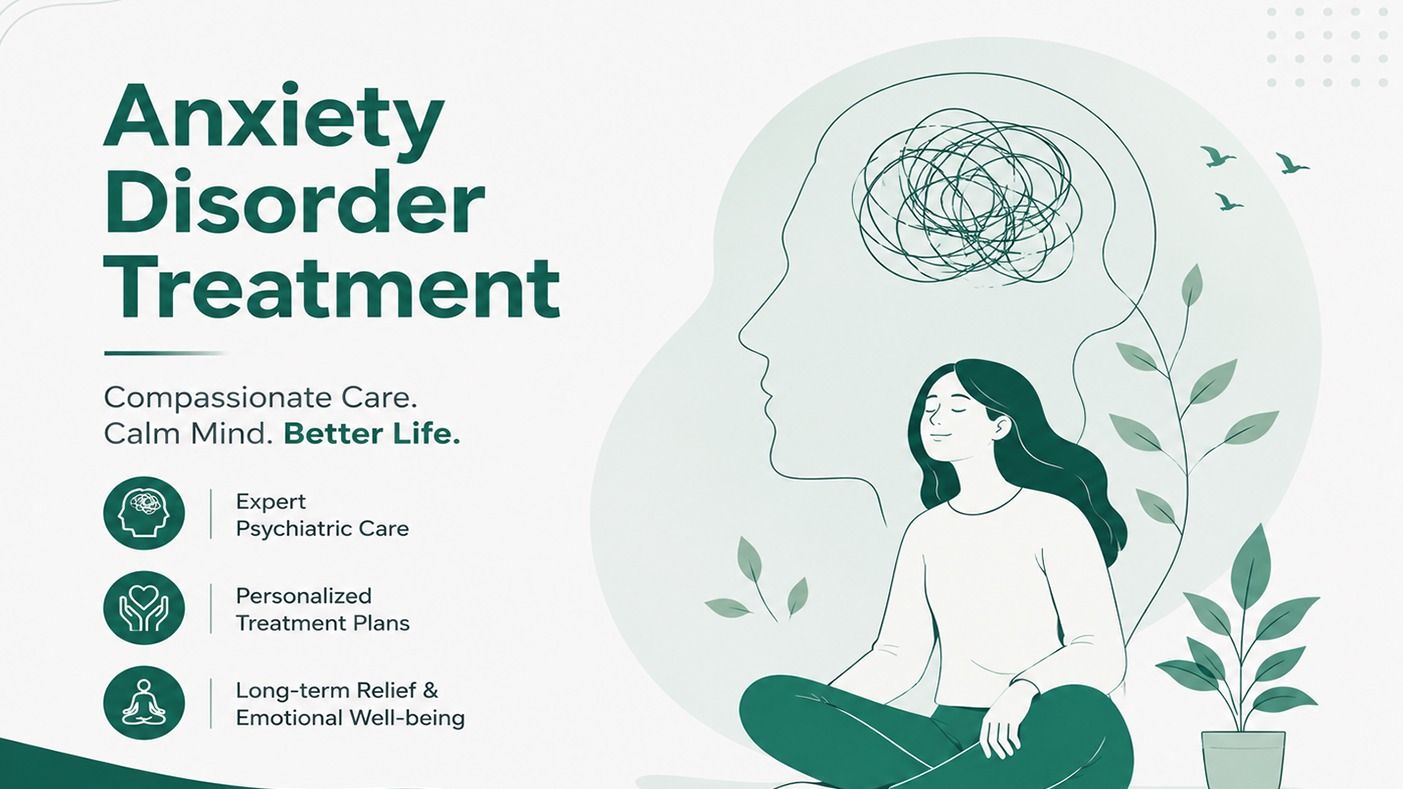
Anxiety disorders are among the most common mental health conditions affecting people of all ages. While occasional anxiety is a normal response to stress, persistent and excessive fear, worry, or nervousness can interfere with daily life, relationships, work, and overall well-being.
Our specialized mental health team provides compassionate, evidence-based anxiety disorder treatment tailored to each patient's emotional and psychological needs.
What is an Anxiety Disorder?
An anxiety disorder is a mental health condition characterized by intense and ongoing feelings of fear, panic, nervousness, or worry. These feelings may occur even when there is no immediate danger or stressful situation. Anxiety disorders can affect both the mind and body, leading to emotional distress as well as physical symptoms.
Common Types of Anxiety Disorders
Generalized Anxiety Disorder (GAD)
Persistent and excessive worry about everyday situations such as work, health, family, or finances.
Panic Disorder
Sudden episodes of intense fear known as panic attacks, often accompanied by chest pain, dizziness, or shortness of breath.
Social Anxiety Disorder
Extreme fear of social interactions, public speaking, or being judged by others.
Phobias
Intense fear of specific objects, situations, or activities such as heights, flying, or crowded places.
Obsessive-Compulsive Disorder (OCD)
Recurring unwanted thoughts and repetitive behaviors aimed at reducing anxiety.
Post-Traumatic Stress Disorder (PTSD)
Anxiety triggered by traumatic experiences or emotionally distressing events.
Symptoms of Anxiety Disorders
Anxiety symptoms may vary from person to person but commonly include:
- Excessive worrying or overthinking
- Restlessness or feeling "on edge"
- Rapid heartbeat or palpitations
- Difficulty concentrating
- Irritability
- Sleep disturbances or insomnia
- Muscle tension
- Sweating or trembling
- Panic attacks
- Fear of social situations
- Fatigue or low energy
If these symptoms persist for weeks or months, professional evaluation is recommended.
Causes of Anxiety Disorders
Several factors may contribute to anxiety disorders, including:
- Chronic stress
- Traumatic experiences
- Family history
- Brain chemistry imbalance
- Personality traits
- Medical conditions
- Substance abuse
- Major life changes
Anxiety Disorder Diagnosis
A mental health specialist performs a detailed psychological assessment, which may include:
- Emotional and behavioral evaluation
- Medical history review
- Symptom assessment
- Stress and lifestyle analysis
- Screening questionnaires
Accurate diagnosis is essential for effective long-term recovery.
Anxiety Disorder Treatment Options
Cognitive Behavioral Therapy (CBT)
Helps patients identify negative thought patterns and develop healthier coping mechanisms.
Medication Management
Certain medications may help reduce anxiety symptoms and improve emotional stability when prescribed by a qualified psychiatrist.
Counseling & Psychotherapy
Professional counseling provides emotional support and strategies to manage stress, fears, and daily challenges.
Relaxation & Stress Management
Mindfulness therapy, meditation, breathing exercises, yoga, and lifestyle modifications for emotional balance.
Exposure Therapy
Gradually helps patients face and overcome fears safely, especially for phobias and panic disorders.
Family & Supportive Therapy
Family involvement can improve emotional support and encourage long-term recovery.
Benefits of Professional Anxiety Treatment
- Improved emotional health
- Better stress management
- Enhanced sleep quality
- Increased self-confidence
- Improved relationships
- Reduced panic attacks
- Better work performance
- Improved quality of life
Why Choose Our Services?
When to Seek Professional Help
You should consider seeking professional help if anxiety:
- Interferes with daily activities
- Causes panic attacks
- Affects relationships or work
- Leads to sleep problems
- Causes social avoidance
- Persists for an extended period
Early treatment can prevent symptoms from worsening and improve long-term mental health outcomes.

Dr. Amisha Vashisht
MBBS, DNB Psychiatry
Ex. VIMHANS Hospital, Delhi
-
+91 08287783415 Call for appointments
-
+91 08287783415 WhatsApp us anytime
-
mindcareclinic2026@gmail.com Email us your query
-
B1/10A, Main Service Ln, Near Bank of Baroda, Block B, Yamuna Vihar, Delhi 110053 Get directions →
-
Mon–Fri | 10:00 AM – 1:00 PM DMC Reg: 101274